
For headphone listening, choose the binaural render; for a standard two-speaker left/right setup, choose the stereo mix.
Für das Hören mit Kopfhörern wähle das binaurale Rendering; für ein normales Zwei-Lautsprecher-Setup (Links/Rechts) wähle den Stereo-Mix.
Shift::Split ( 2026 )
10′ Englischhorn & Live-Elektronik
Shift::Split ist ein Werk für Englischhorn und Live-Elektronik mit 29-kanaliger Raumprojektion. Die Live-Elektronik, realisiert in Max/MSP, entsteht ausschließlich aus dem Spiel des Interpreten – ohne Zuspielungen, ohne vorgefertigtes Material.
Das Instrument wird von innen und außen hörbar gemacht. Luft, Atem und instabile Resonanzen aus der Bohrung treffen auf Klappenimpulse und mechanische Geräusche des Instruments. Klänge, die in der klassischen Spielpraxis meist als Nebengeräusche gelten, treten hier in den Vordergrund und bilden das klangliche Ausgangsmaterial.
Die Spielweise bewegt sich bewusst jenseits des konventionellen Englischhornklangs. Luftströme, Whistles, Atem, Slaps ohne Mundstück, Klappenimpulse, Presstöne und Multiphonics bestimmen das Geschehen. Diese sogenannten Spaltklänge entstehen, wenn sich das Instrument in mehrere gleichzeitige, instabile Resonanzen aufteilt.
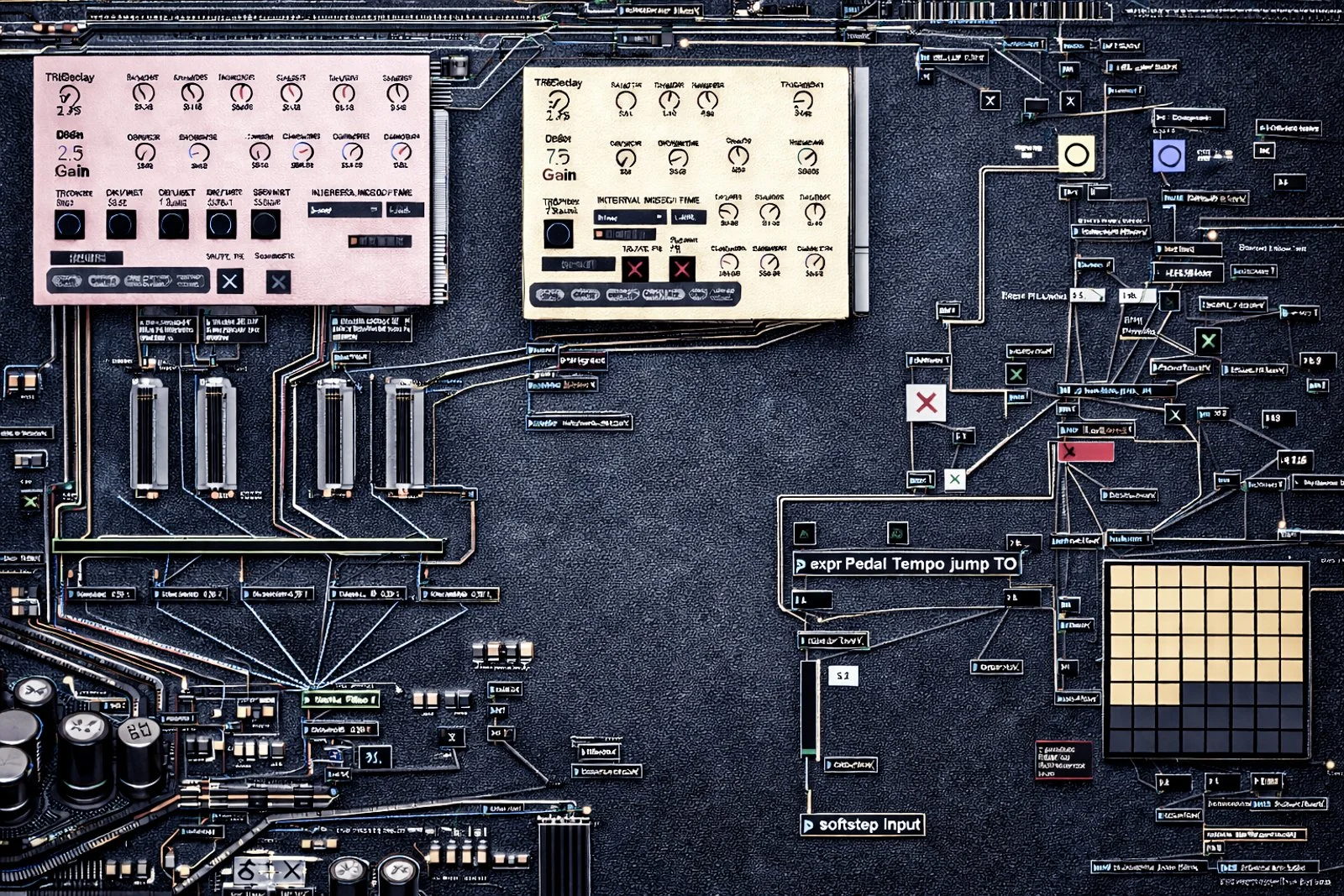
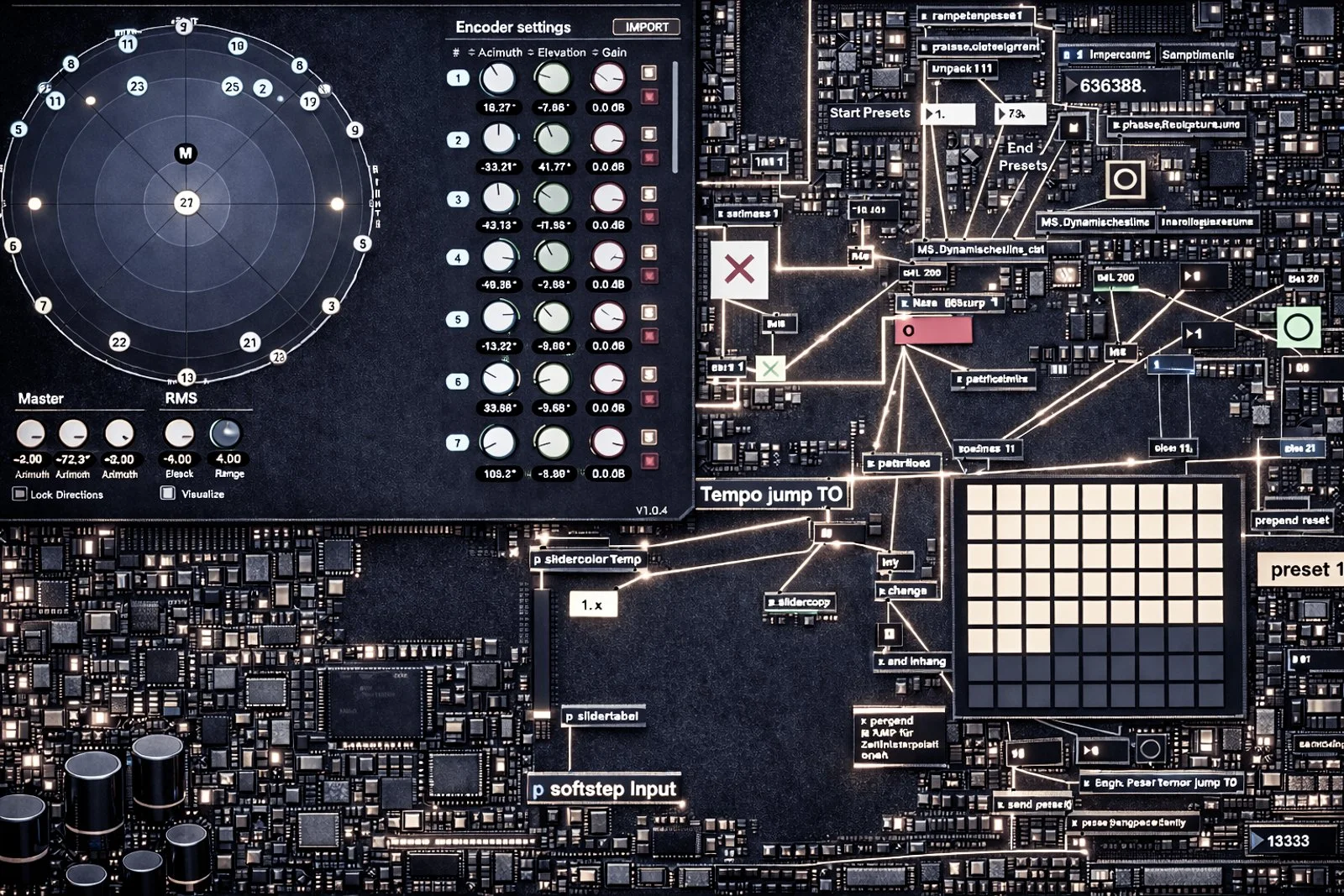
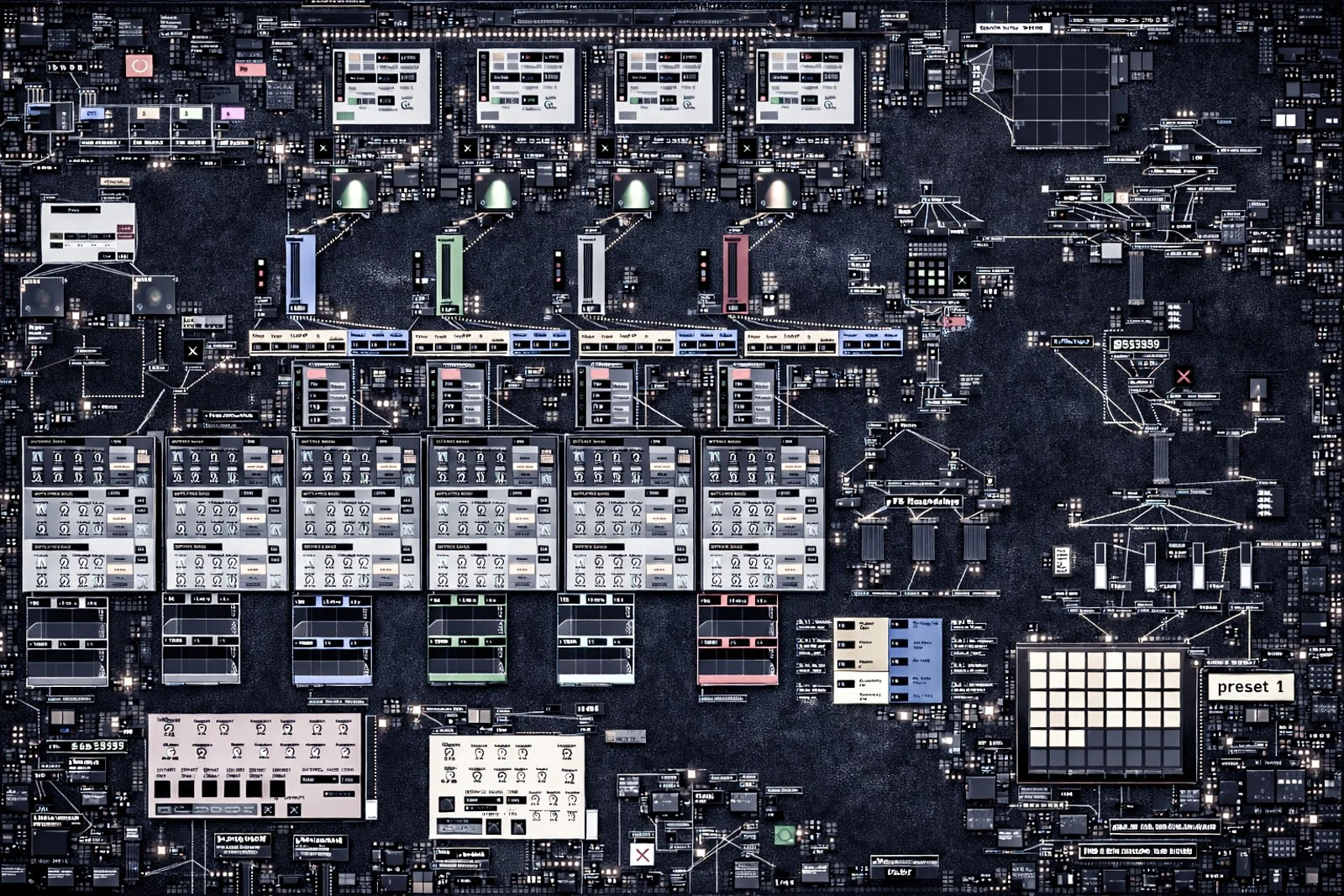
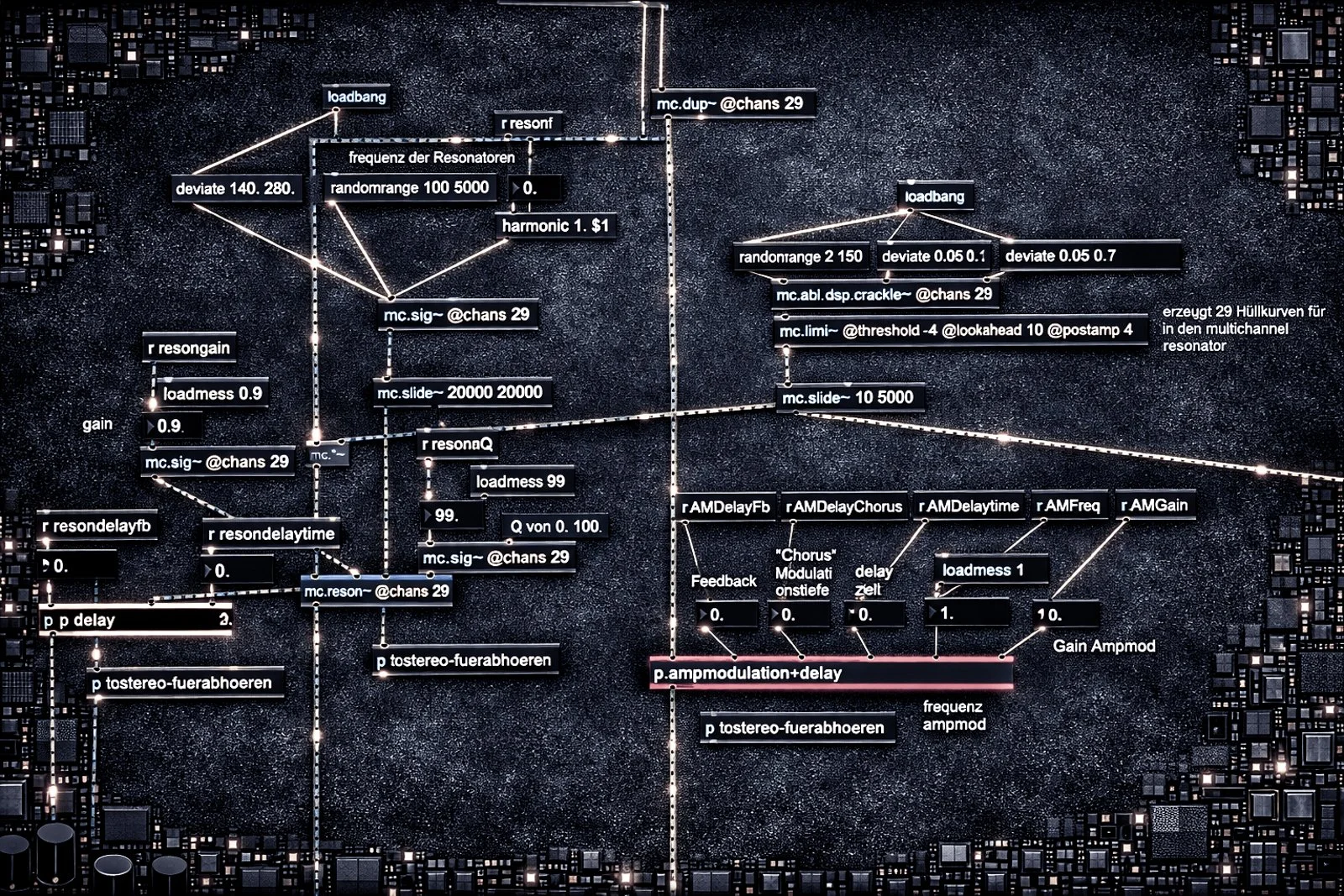
Diese Aufspaltung setzt sich in der Elektronik fort. Multiphonics werden spektral zerlegt und im Raum verteilt, einzelne Klanganteile lösen sich voneinander und treten eigenständig hervor. Vier Delaystrukturen mit kontinuierlicher Frequenzverschiebung verändern die Wiederholungen fortlaufend; das Klangmaterial entfernt sich schrittweise von seinem Ursprung.
Gespielt wird von einer grafischen Partitur, die vorgibt, welche Spielweisen und Klangqualitäten zu welchem Zeitpunkt gefordert sind.
Shift::Split
10′ English horn & live electronics
Shift::Split is a work for English horn English horn (cor anglais) and live electronics with 29-channel spatial projection. The live electronics, realized in Max/MSP, are generated exclusively from the performer’s playing—no playback, no pre-recorded material.
The instrument is made audible from both inside and out. Air, breath, and unstable resonances from the bore meet key impulses and the instrument’s mechanical noises. Sounds that are usually treated as incidental in classical performance practice move to the foreground and become the work’s primary sound material.
The playing deliberately moves beyond the conventional English horn sound. Air streams, whistles, breath, slaps without the reed, key impulses, pressure tones, and multiphonics shape the piece. These so-called “split sounds” arise when the instrument divides into several simultaneous, unstable resonances.
This splitting continues in the electronics. Multiphonics are spectrally decomposed and distributed in space; individual components separate and emerge as independent voices. Four delay structures with continuous frequency shifting keep transforming the repetitions; the sound material gradually drifts away from its origin.
The piece is performed from a graphic score that specifies which playing techniques and sound qualities are required at each moment.
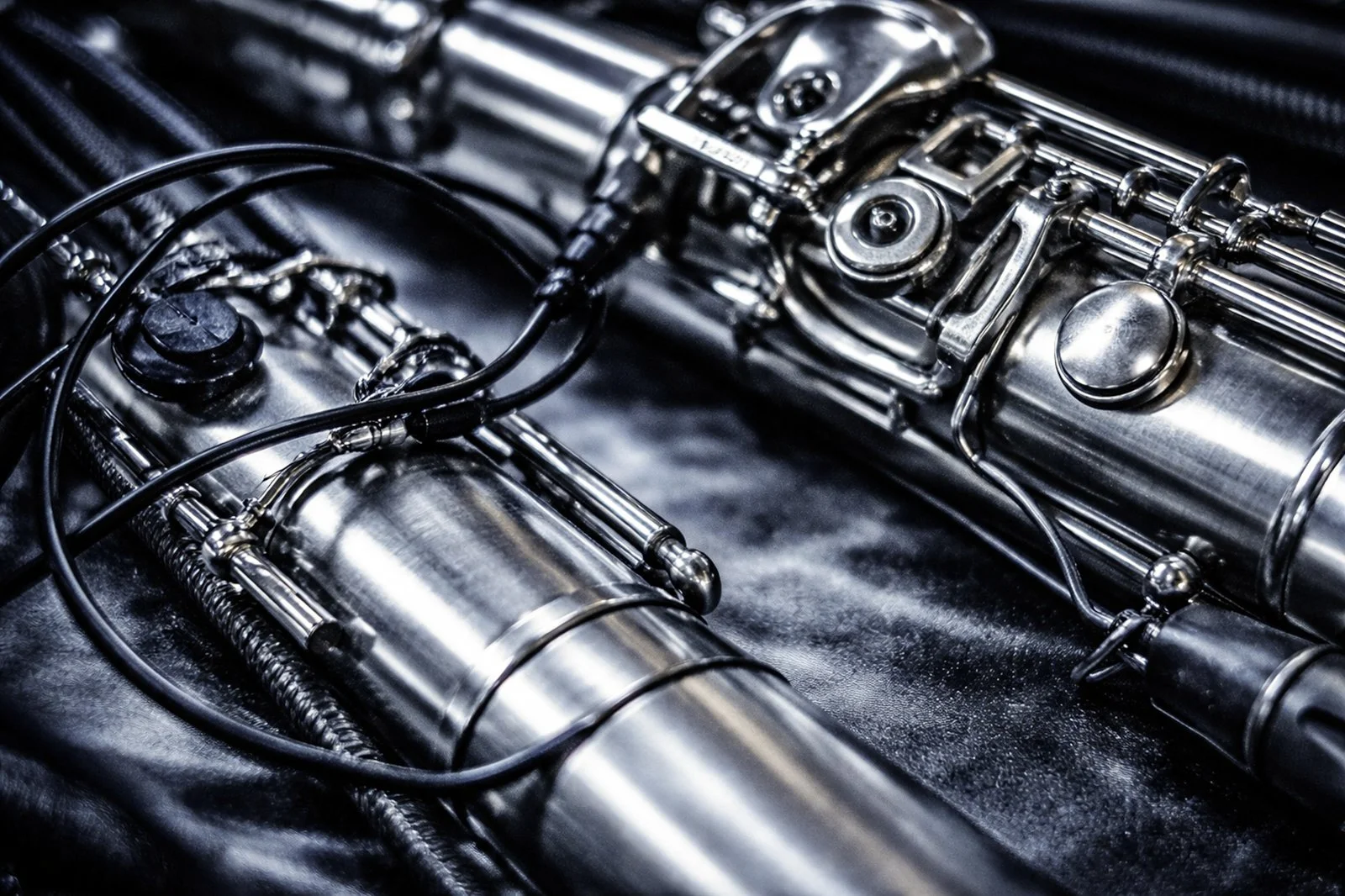
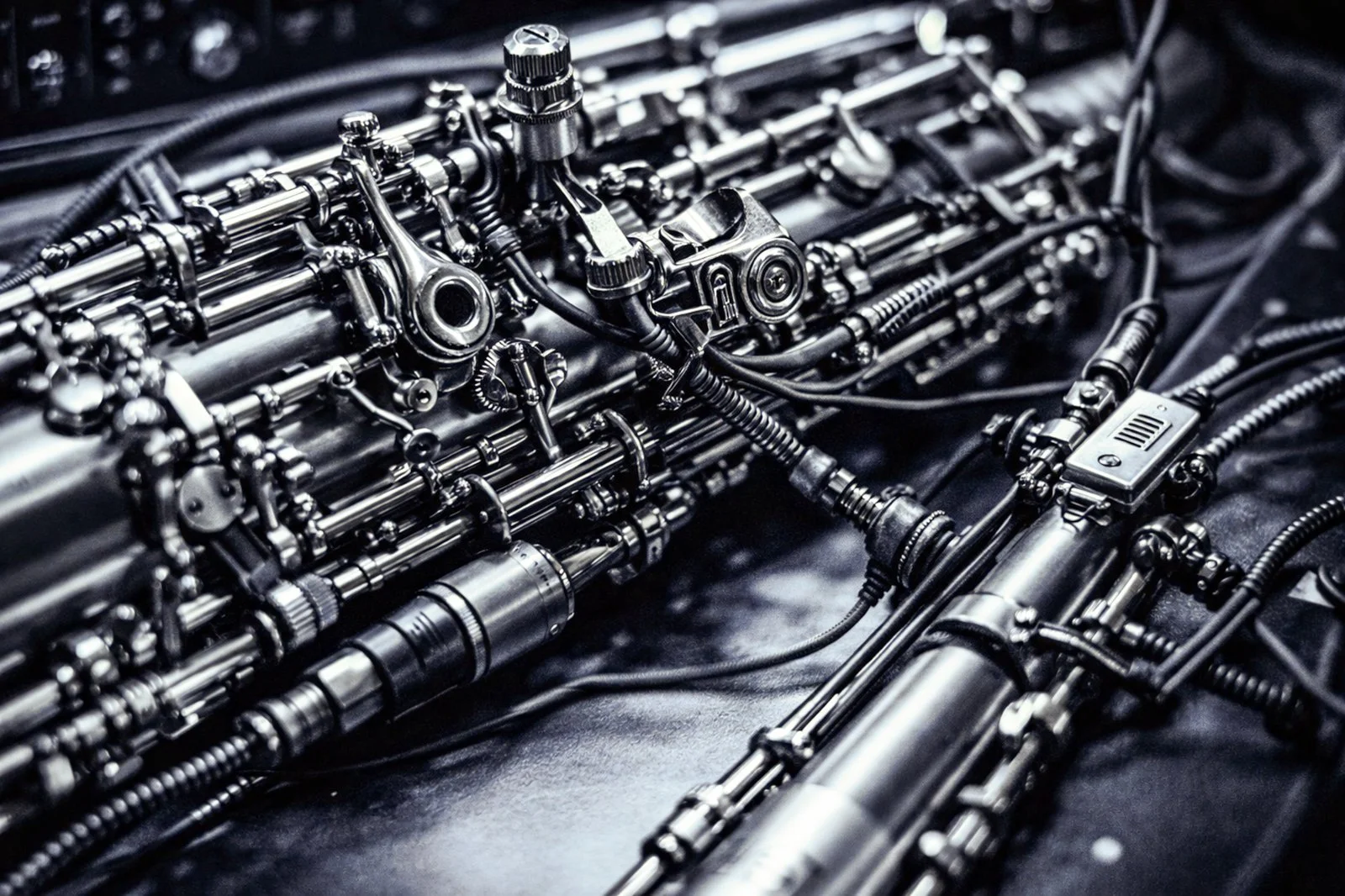
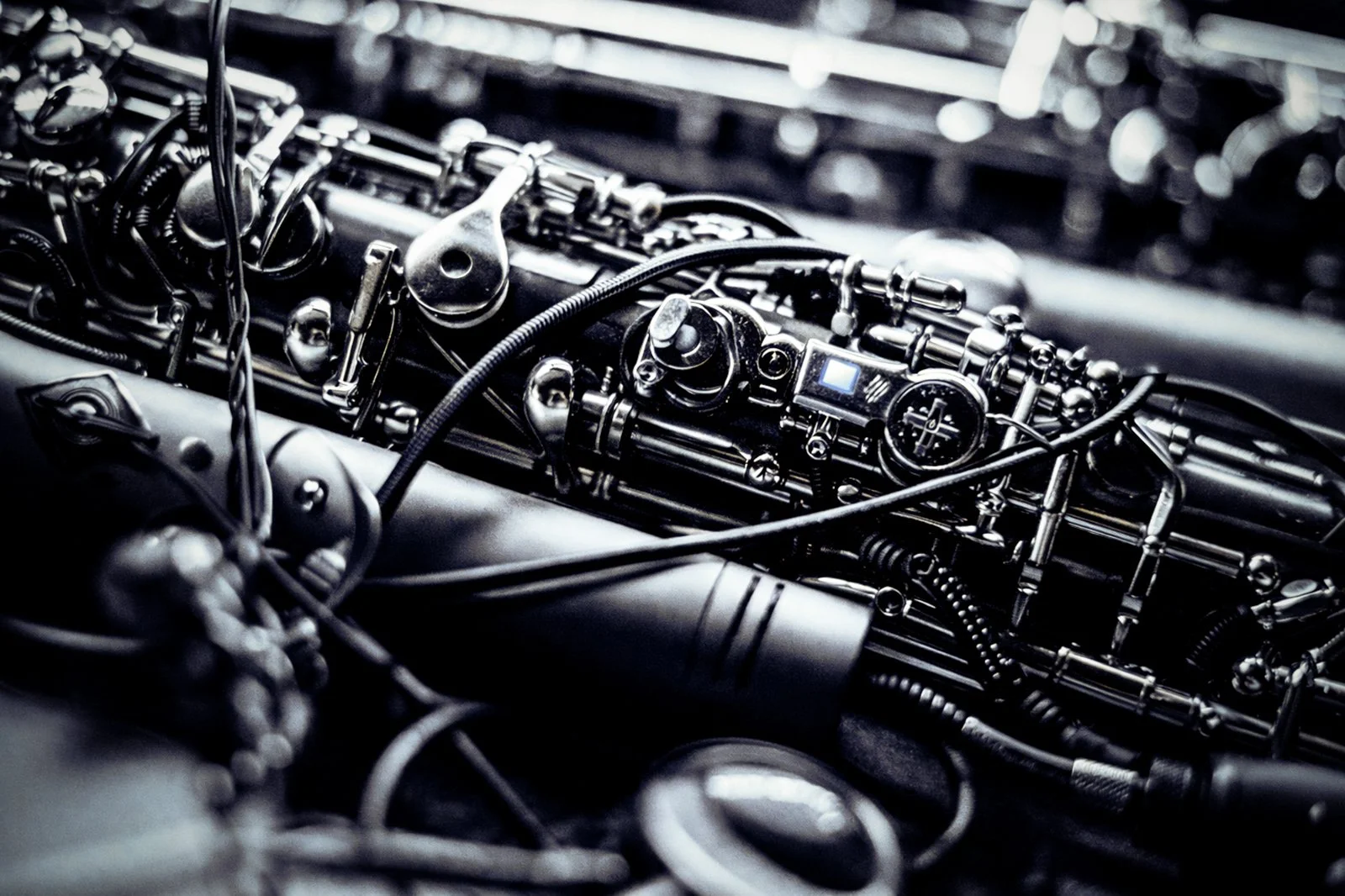
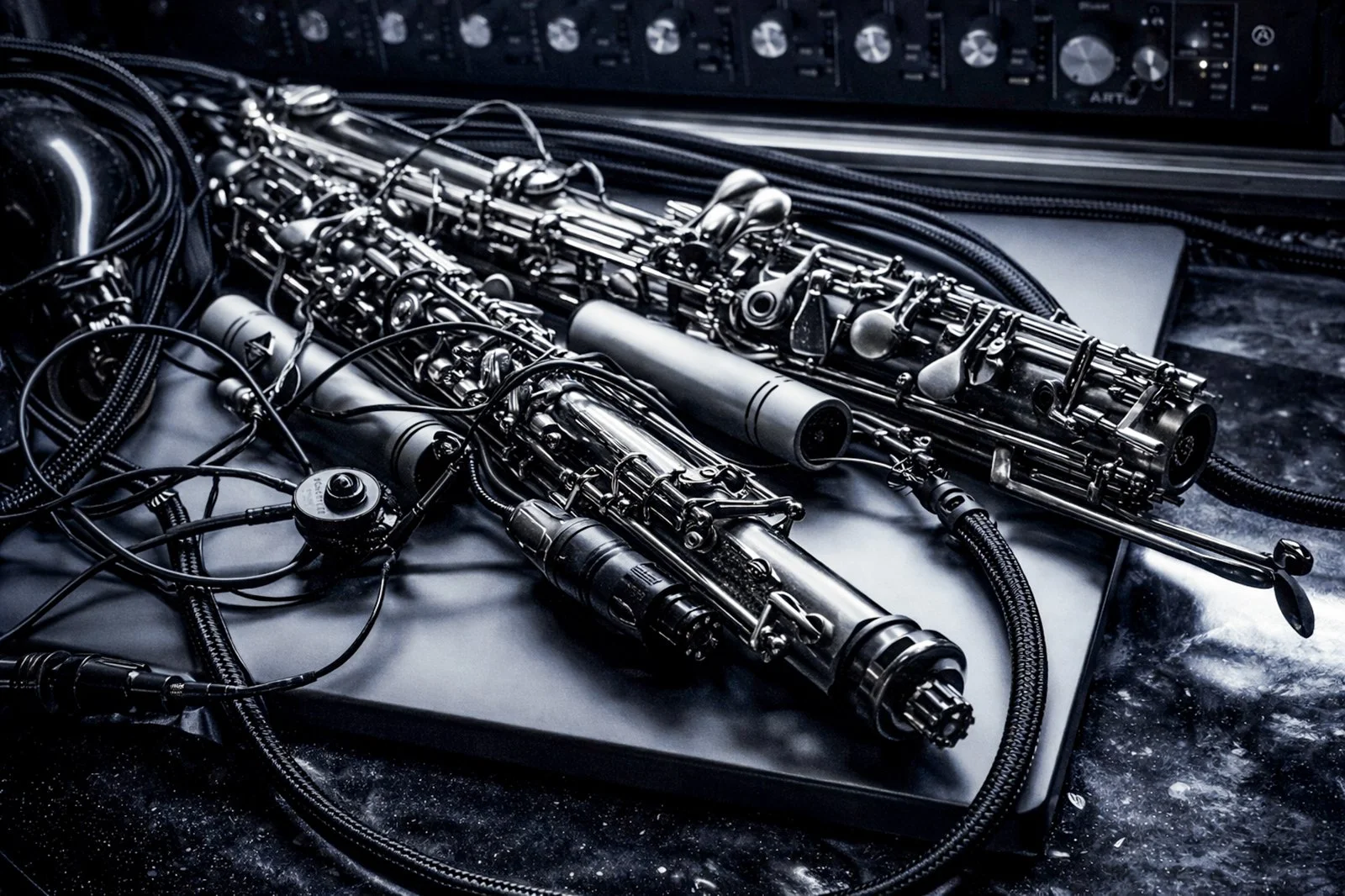
“Images on this page were generated with AI.”
https://github.com/markusepperer/Shift--Split
Find the code on my Github-Site
Premiere von Shift::Split im Klangtheater der Wiener Musikuniversität am 1.2.2026.
Englischhorn, Live Elektronik und Komposition : Markus Sepperer
Video : Christian Tschinkel
Grafische Partitur für shift::split.
Das Tempo wird von Max.Msp gesteuert, indem ein roter Balken von links nach rechts über die Seiten scrollt. Die Tonhöhen der Klappengeräusche und Slaps sind je nach Position auf der y-Achse intuitiv zu erfassen. Die Multiphonics sind als Tabulaturen notiert.
—
Graphic score for shift::split.
The tempo is controlled by Max/MSP: a red bar scrolls across the pages from left to right. The pitches of key clicks and slaps can be intuitively read from their position on the y-axis. The multiphonics are notated as tablatures.